We received new products - Visit our catalog!
Optimizing LED Driver Lifespan Against Beirut’s Grid Instability

The Beirut Grid Gauntlet: Why Your LED Drivers Are Dying Prematurely
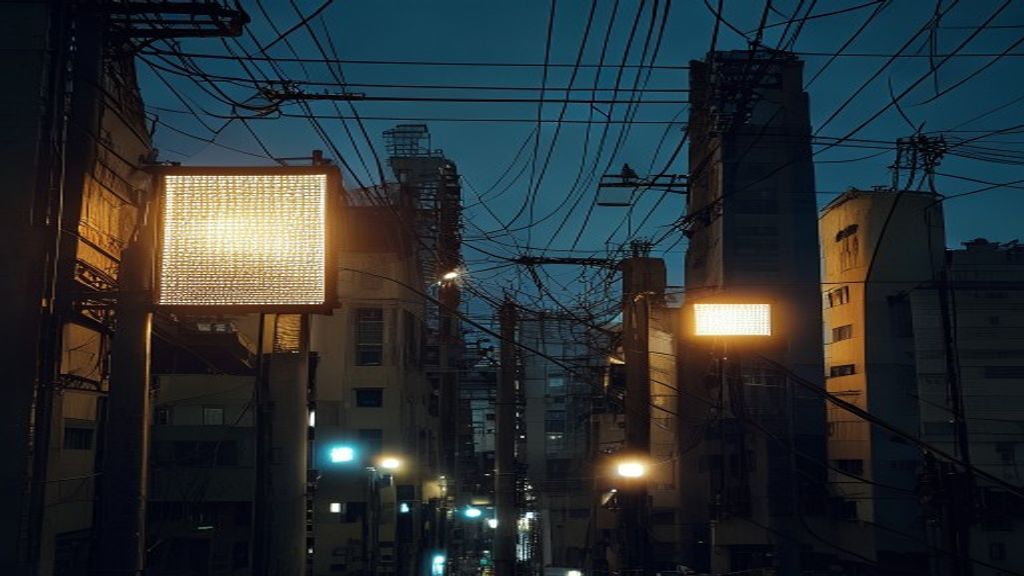
Let’s be brutally honest. Operating any sensitive electronics in Lebanon feels less like standard engineering practice and more like a high-stakes stress test. We all know the drill: the EDL cuts out, the automatic transfer switch slams, and suddenly your 230V line surges to 260V+ from the generator, often with transient spikes that would make a conventional oscilloscope weep. For LED lighting, this isn’t just an inconvenience; it’s a slow, agonizing execution for your otherwise perfectly good luminaires. We’re watching perfectly specified LED drivers from reputable brands (and a lot of ‘European-sounding’ knock-offs) burn out in months, not years, and the root cause is almost always the same: an unstable grid and inadequate protection.
THERMAL MANAGEMENT: The critical process of dissipating heat generated by electronic components to maintain optimal operating temperatures, directly impacting component lifespan and system reliability. In LED drivers, poor thermal management exacerbates the effects of electrical stress, leading to premature failure, especially of electrolytic capacitors and switching MOSFETs.
The Unseen Killers: Engineering Physics of Grid Instability on LED Drivers
When the input voltage jumps, or when high-frequency noise from poorly maintained generators permeates the line, the internal components of an LED driver are under immense strain. Cheap imports, often touting impressive-sounding but ultimately hollow ‘specs’ like “PF > 0.95” and “CRI > 90” (which they might hit under ideal, stable conditions), are invariably designed to cost, not resilience. They cut corners where it matters most: the input stage.
- Insufficient Input Capacitance: The electrolytic capacitors, responsible for smoothing the rectified AC, are typically rated for 250V or 400V and a specific ripple current. A cheap capacitor with inadequate ripple current rating and a flimsy 85°C or 105°C temperature rating will degrade rapidly under constant voltage fluctuation and increased internal heating, often due to high ripple currents during low-quality generator operation. Our drivers utilize 125°C rated, long-life capacitors.
- Weak Surge Protection: Most drivers rely on a basic MOV (Metal Oxide Varistor) for surge protection. While effective for minor spikes, the continuous barrage of kV-level transients common in our grid quickly degrades these MOVs, rendering them useless and exposing the sensitive rectifier and switching ICs to direct damage. We integrate multi-stage surge protection, often combining MOVs with GDTs (Gas Discharge Tubes) and TVSs (Transient Voltage Suppressors), rated for up to 10kV common mode and 6kV differential mode surges.
- Inadequate Heatsinking: The switching MOSFETs and rectifier diodes within the driver generate heat. Without robust thermal management – proper heatsinks, thermal paste, and PCB layout – this heat accumulates. Add grid instability, which increases current spikes and thus heat generation, and you accelerate the component degradation significantly. This is why a driver rated for 140lm/w might deliver that efficiency on paper, but only briefly under local conditions if its thermal design is flawed.
The cumulative effect is a driver that might theoretically last 50,000 hours, failing in less than 5,000.
EMC Superled: Engineered for Lebanese Reality
This isn’t just about selling lights; it’s about providing solutions that actually work, day in and day out, in our unique operating environment. At EMC Superled, we don’t just import and rebrand. We design, assemble, and test right here in our Lebanese factory. This means:
- Component Selection: We specify industrial-grade components, particularly for the input stage – higher voltage rated capacitors, robust surge protection devices, and efficient power factor correction (PFC) circuitry designed to handle voltage swings beyond typical European standards.
- Thermal Design Validation: Our engineering team rigorously tests thermal performance under extreme conditions, ensuring that even when operating at elevated ambient temperatures and with fluctuating input, our drivers maintain component junction temperatures well within manufacturer limits.
- Local Warranty & Spares: When a problem arises, you’re not waiting 3 months for a container from China to clear customs, hoping it contains the correct replacement driver. Our local stock and skilled technicians mean rapid turnaround times, minimizing your project’s downtime and mitigating operational headaches. We stand by our products because we build them to endure.
Challenge Our Engineering: Let’s Talk Durability
Don’t just take our word for it. If you’re experiencing chronic LED driver failures or want to design a robust lighting system that can truly withstand Beirut’s grid, we invite you to engage with our engineering team. Bring your burnt drivers to our lab; let us diagnose the failure mode and demonstrate how our solutions are fundamentally different. Or, book a technical consultation to discuss a custom solution for your next project. Let’s build lighting systems that are not just bright, but resilient.