We received new products - Visit our catalog!

Why Your Hummus Looks Grey: The Restaurant Owner’s Guide to “Instagrammable” Lighting

By Anthony Gemayel, Electrical Engineer Estimated Reading Time: 5 Minutes
We live in the age of “Camera Eats First.” Before a customer takes a bite of your signature dish, they take a photo. They post it on Instagram or TikTok. Thousands of people see it.
If your lighting is bad, that photo will look unappetizing. The meat looks grey. The salad looks flat. The hummus looks like cement. You just lost free marketing.
Lighting is the https://www.google.com/search?q=%231 factor in “Atmosphere” and “Appetite Appeal.” At EMC Superled, we work with Lebanon’s top interior designers to ensure that when the food hits the table, it looks like a masterpiece.
Here is why your food might look dead, and how to fix it.
1. The “Color Temperature” Mistake (2700K vs. 4000K)
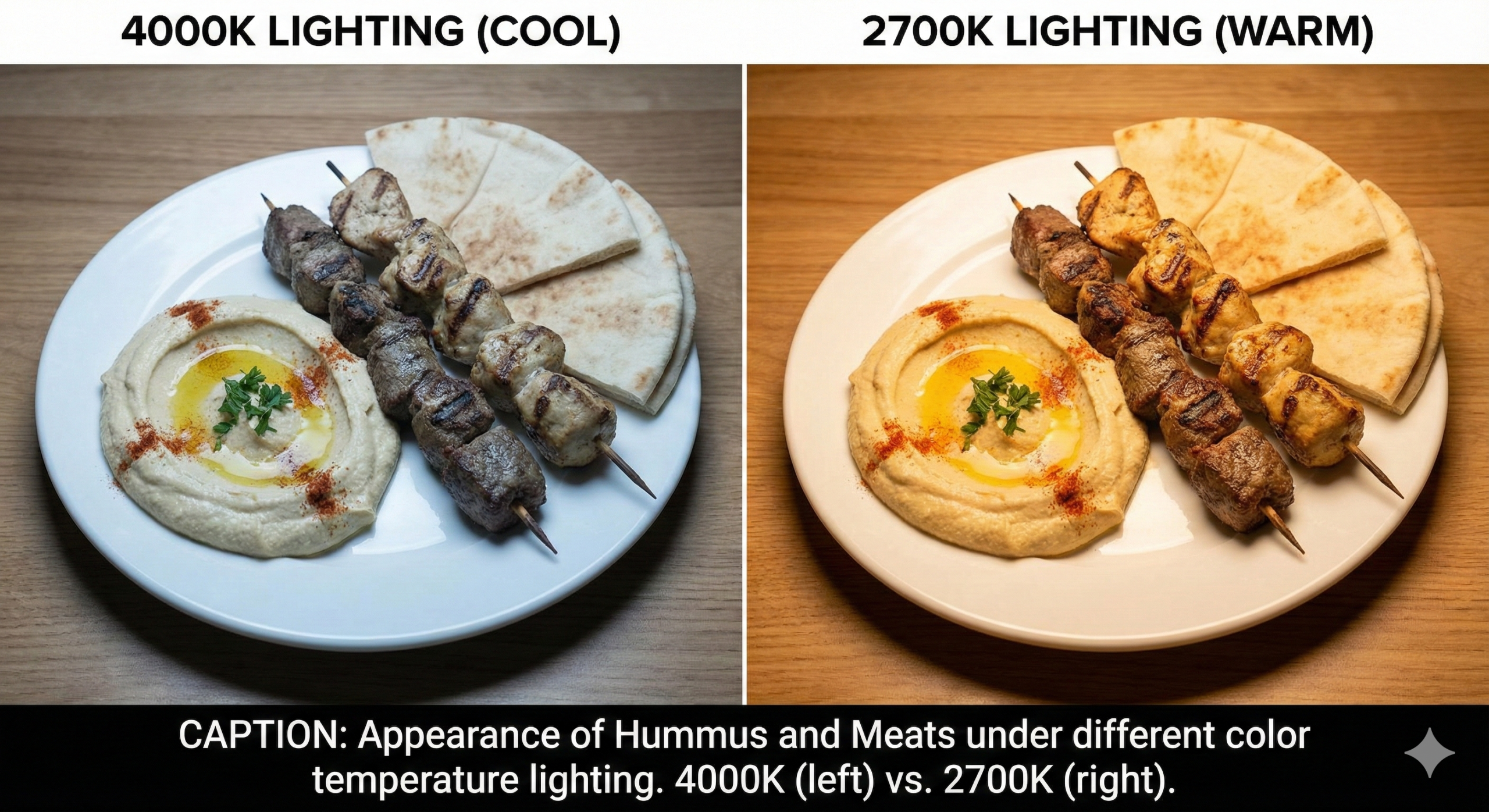
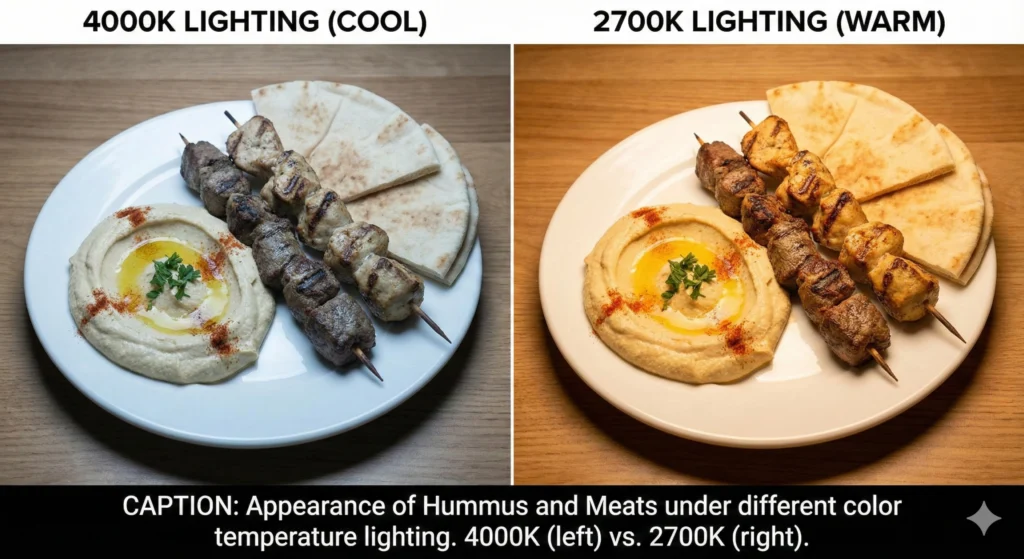
I see this mistake in so many new snack bars and casual dining spots. They install 4000K (Neutral White) panels because they want it to look “clean.”
4000K is for offices and pharmacies. It is clinical. When you put a plate of food under 4000K:
- Red tomato sauce turns brown.
- Golden olive oil turns greenish-yellow.
- Warm bread looks stale.
The Rule: Food loves Warmth. For dining, you must use 3000K or even 2700K (Extra Warm). Warm light enhances the reds, oranges, and yellows found in roasted meats, baked goods, and mezze. It makes the food look hot and fresh.
2. High CRI (R9) is Mandatory for Meat
We talked about CRI (Color Rendering Index) for architects, but for chefs, it is even more critical. Standard LEDs have low R9 (Red) values.
If you serve steak, sushi, or even tomato-based pasta, you need R9 > 50.
- Low R9: The steak looks grey inside, even if it is medium-rare. The tuna looks dull.
- High R9: The red pops. The meat looks juicy. The brain instantly signals “This is fresh.”
3. The “Dim-to-Warm” Technology (The Vibe Setter)
In the old days, restaurants used Halogen bulbs. When you dimmed them for dinner service, they naturally turned orange and cozy (like a sunset).
Standard LEDs don’t do that. When you dim them, they just get grey and dull. It feels “ghostly.”
The Solution: Dim-to-Warm Technology EMC manufactures special “Sunset Dimming” chips.
- At 100%: It is a crisp 3000K (Lunch Service).
- At 50%: It warms to 2700K (Dinner).
- At 10%: It glows at a candle-like 2200K (Late Night Drinks).
This technology brings back the romance of the old filament bulb but with the efficiency of modern LED.
4. Light the Table, Not the Floor
A common amateur mistake is spreading light everywhere evenly. If the floor is as bright as the table, you lose intimacy. The customer feels exposed, like they are in a cafeteria.
The Strategy: High Contrast
- Use Narrow Beam Spots (24°) aimed directly at the center of the table.
- Keep the aisles dark.
- Result: The table becomes a “stage.” The food is the star. The messy floor or the waiter walking by disappears into the shadows. This creates privacy and focus.
Conclusion: Lighting is Your Best Ingredient
You spend thousands on imported ingredients. You hire the best chefs. You buy expensive plates. Don’t ruin it all with a cheap $5 spotlight that turns your Filet Mignon grey.
The “Instagram Test”: Invite us to your restaurant. We will bring a portable High-CRI lamp. We will shine it on one of your dishes, and you can take a picture with your phone. The difference will shock you.