لقد تلقينا منتجات جديدة - زوروا كتالوجنا!

Why Your LEDs Keep Dying: It’s Not Just the “Kahraba”

By Anthony Gemayel, Electrical Engineer Estimated Reading Time: 5 Minutes
We all know the struggle. You buy a new LED bulb. It works great for two weeks. Then, suddenly, it starts flickering like a strobe light. A week later, it’s dead.
You blame the “Kahraba” (Electricity). You blame the generator guy. You blame the shopkeeper.
But here is the uncomfortable truth: It’s not just the electricity. It’s the bulb you bought.
Yes, the Lebanese grid is a mess. But if your smartphone charger doesn’t burn out every week, why does your light bulb? The answer lies in the cheap electronics inside generic LED drivers.
At EMC Superled, we engineer our lights specifically for the “Lebanese Reality.” Here is why your lights are dying and how to stop it.
1. The “Generator Switch” Spike
In most countries, voltage is stable at 220V. In Lebanon, we switch power sources 4-10 times a day.
- EDL (State Power) cuts off.
- APS (Generator) kicks in.
In that split second of transfer, there is often a massive Voltage Spike. The power might jump to 260V or even 300V for a millisecond.
- Cheap Driver: The capacitor inside is rated for 240V. When the spike hits 260V, it pops.
- EMC Driver: We use capacitors rated for 400V. The spike hits, our driver absorbs it, and the light stays on.
2. The “Brownout” (Low Voltage)
Sometimes, the problem isn’t high voltage; it’s low voltage. When everyone turns on their ACs in August, the voltage in your building might drop to 180V or 160V.
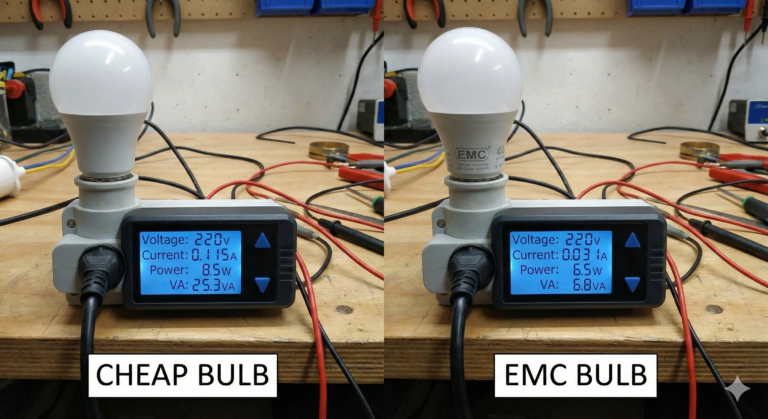
A standard “European Spec” LED is designed to run at 220V ±10%. When the voltage drops to 180V, a cheap driver starves. It starts pulsing (flickering) because it can’t maintain the current. This stressing of the components eventually kills the light.
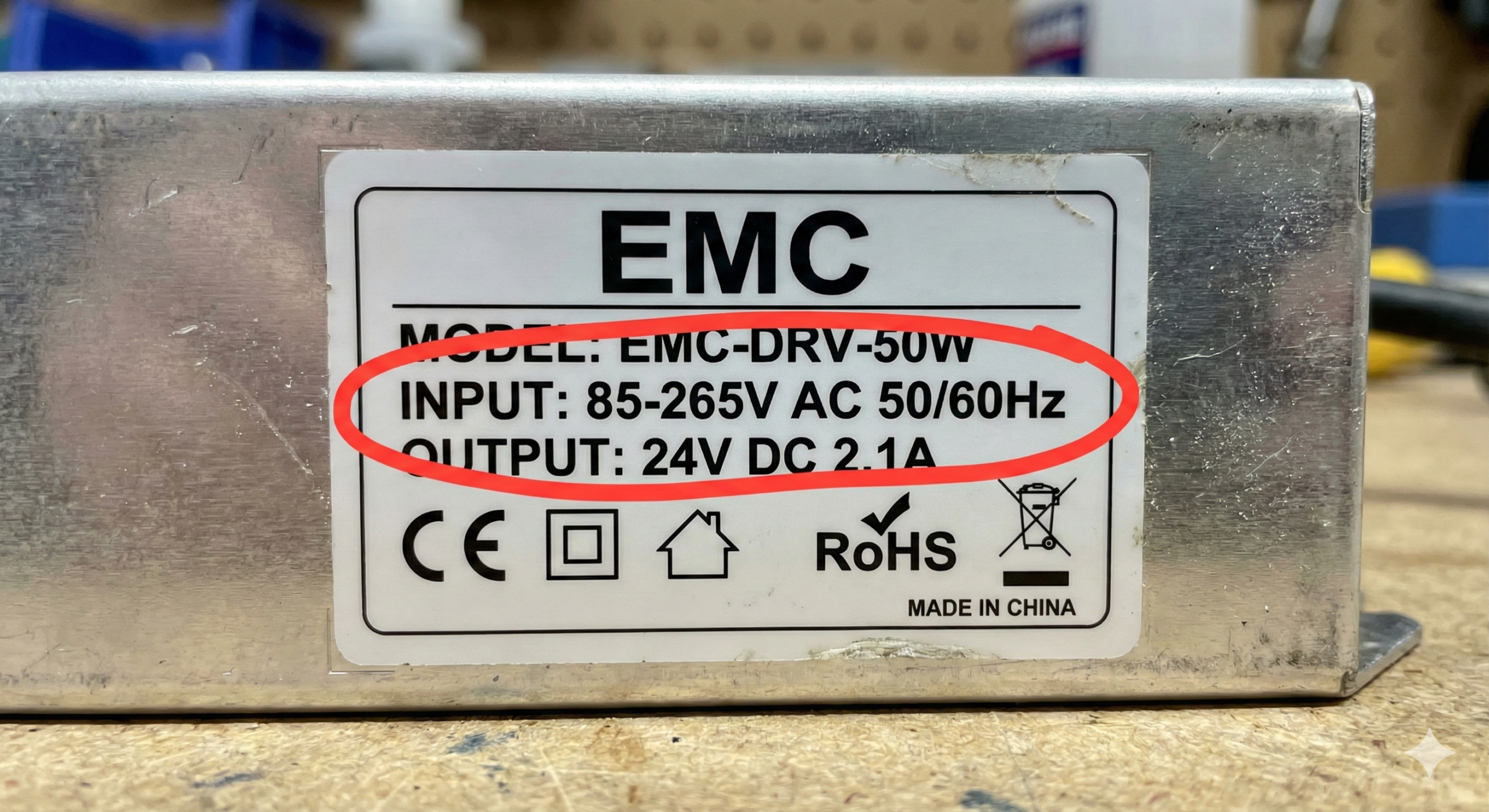
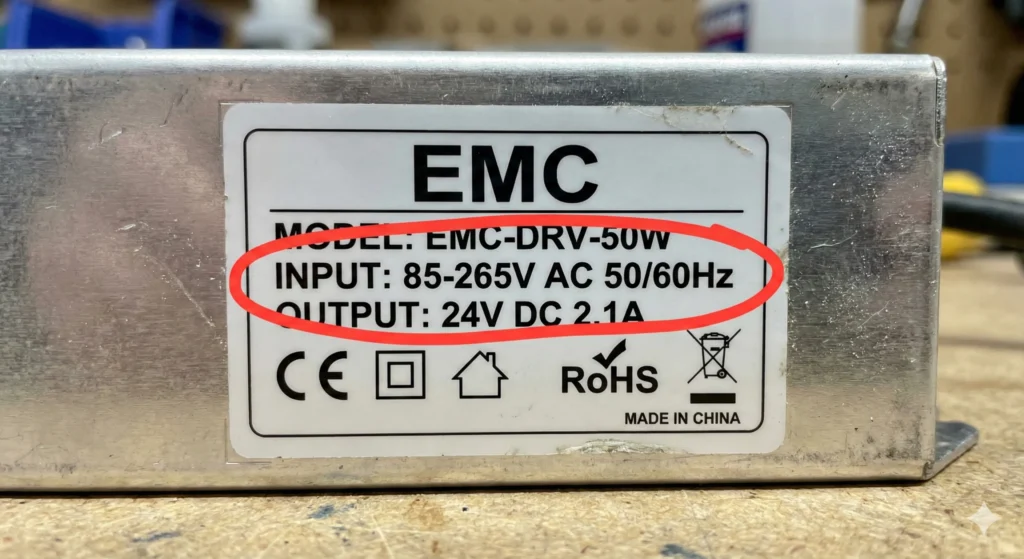
The Solution: Wide Voltage Drivers Look at the label on our EMC drivers. You will see: Input: AC 85V – 265V. This means your electricity can drop to 90V (basically a brownout), and our light will shine at full brightness with zero flicker. It acts like a built-in stabilizer.
3. The Heat Trap (User Error)
This one might be your fault. Did you buy a high-wattage LED bulb and put it inside a closed glass fixture (a “ball” or flush mount)?
LEDs need to breathe. They generate heat from the back. If you trap that heat inside a glass globe with no airflow, the temperature rises.
- At 85°C: The light works fine.
- At 105°C: The electronics start to cook.
- At 120°C: The driver fails.
The Fix: If you have closed fixtures, use lower wattage bulbs (9W instead of 15W) or use fixtures designed with air vents. Or, buy EMC bulbs with Aluminum Heat Sinks (not plastic) which dissipate heat much faster.
4. The “Dirty Power” (Harmonics)
Generators often produce “dirty” electricity (unstable frequency). Cheap LEDs have Non-Isolated Drivers. They are directly connected to the mess coming from the wire. EMC LEDs use Isolated Drivers. There is a physical separation (a transformer) between the grid and the LED chip. The driver acts as a filter, cleaning the power before it hits the delicate light source.
![INSERT IMAGE: Photo of a burnt/melted cheap driver next to a clean EMC driver.]
Conclusion: Stop Buying Disposable Lights
If you are tired of climbing the ladder every month to change bulbs, stop buying the $1.00 special. You aren’t saving money; you are renting light for a few weeks.
Our lights cost a little more because they are armored tanks designed for the electrical battlefield of Lebanon.
Want to test your home’s voltage? We offer a free service. Bring us one of your burnt bulbs. Our engineers can often tell you exactly why it died (Spike? Heat? Defect?) just by looking at the circuit board.